Sensors and daily routines at home
Luciane’s MBA project uses presence sensors throughout the home to study activity patterns and possible changes in daily routines.
A project by Palma Labs
CidaGuard helps older adults take part in family life by adapting how they receive updates and interact.
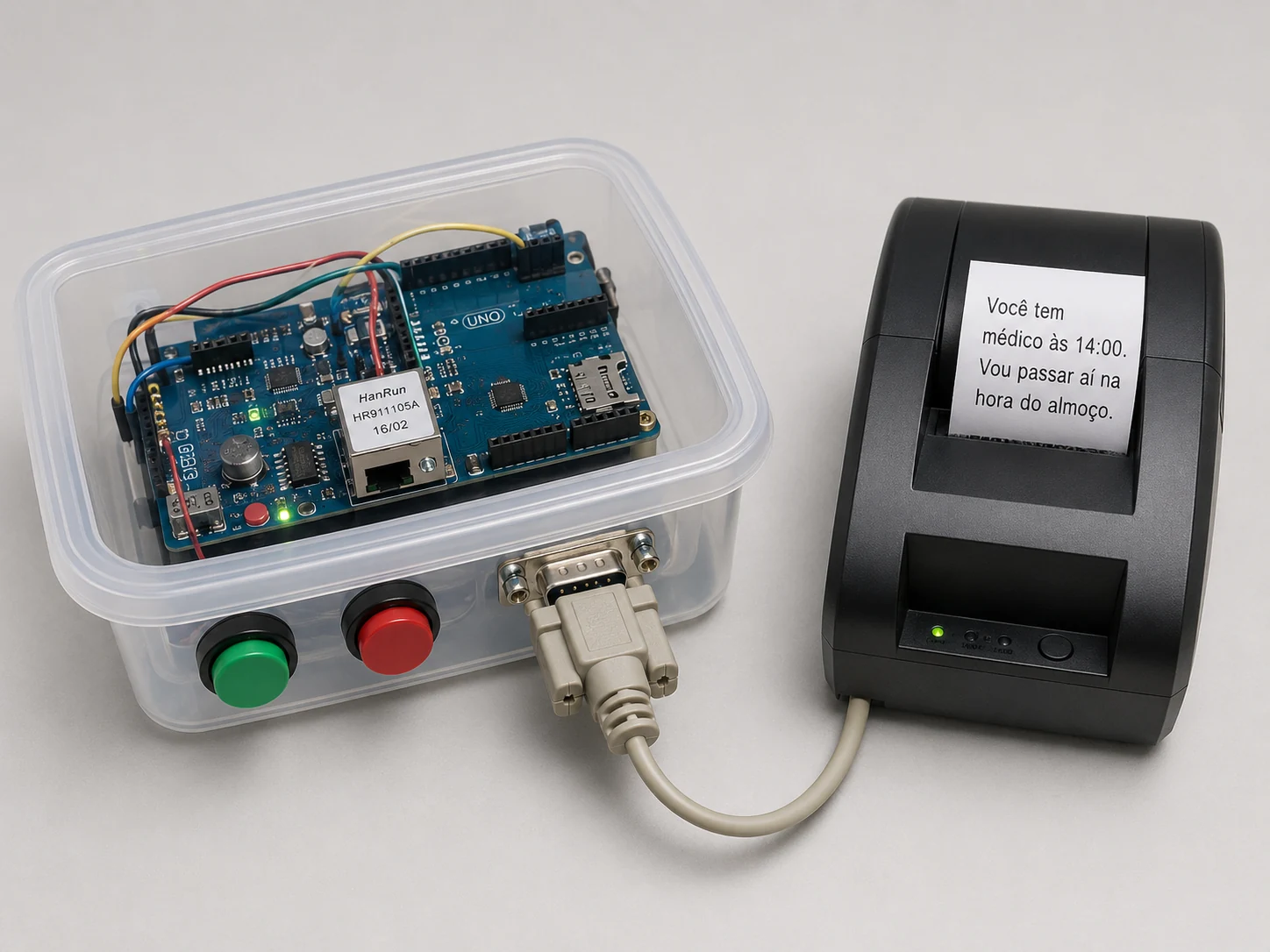
Dona Cida, the mother of one of the project’s creators, found it difficult to use a smartphone. Her family needed a simple way to get a message to her. Their first solution fit inside a box with two buttons connected to a thermal printer.
The idea took on new forms over time. A large display, an Xbox controller, colored tags, gestures, and voice gave Dona Cida more ways to interact. The solution built for her became a platform that can adapt to different people and routines.
A photo in the family group chat or a birthday video can go unseen when someone finds it difficult to use a phone. Those barriers vary from person to person, whether they live alone, with family, or in long-term care.
The World Health Organization links loneliness and social isolation to physical and mental health risks. CidaGuard aims to reduce the technology barriers that get in the way of staying connected, so each person can take part in their own way.
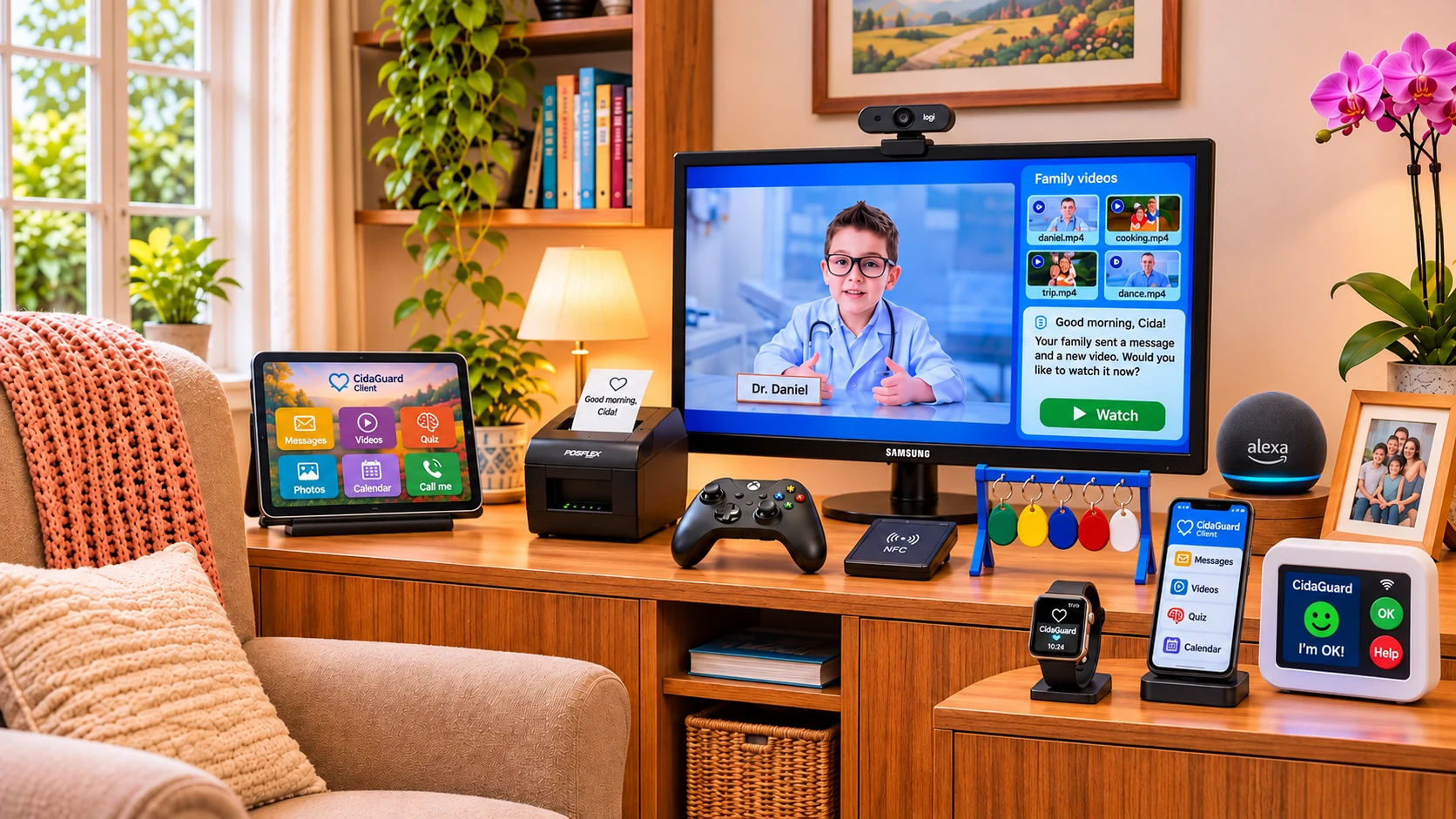
WHO on social connectionThey can send photos, albums, notes, videos, reminders, and activities such as quizzes. CidaGuard can also show the weather forecast.
It can appear on a large display, phone, tablet, or connected device. It can also arrive on paper, through Alexa, on a watch, or as a sound or light.
Using touch, voice, gestures, buttons, an Xbox controller, or RFID/NFC tags, they can browse, confirm an activity, answer a quiz, or send an alert such as “Call me.”
See how messages arrive, how people can respond, and where insights about daily routines come from.
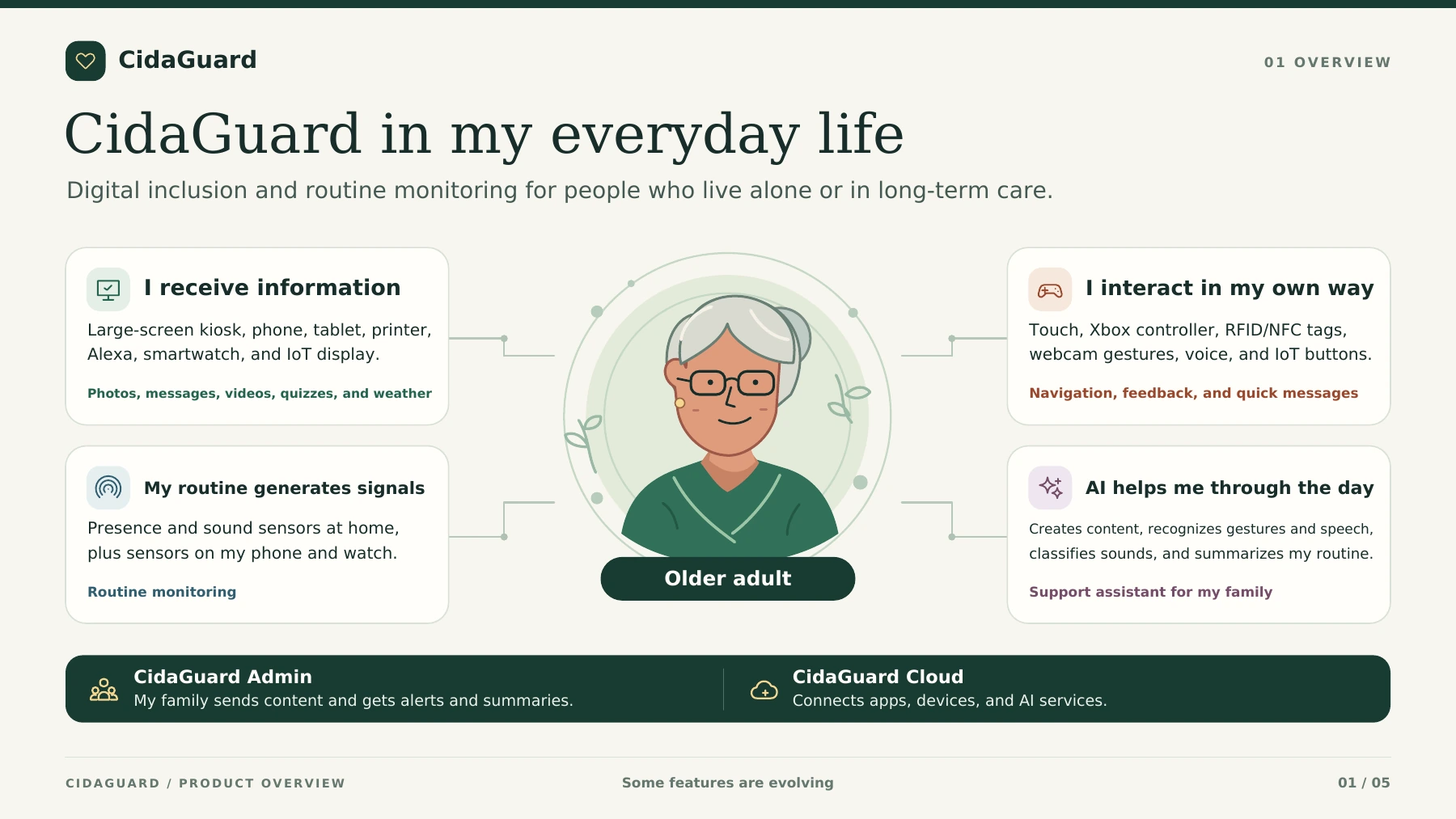
Everyday signals can help family members and care teams notice changes that may be worth a conversation or a visit.
The platform brings together enabled signals and can provide summaries and alerts based on its settings. This monitoring supports in-person care. Using the data requires consent, device permissions, and access limited to authorized people.
AI opens up more ways to receive information, respond, and understand what happened during the day. These features are at different stages of research, testing, and development.
With CidaGuard Admin, families can send content and configure the experience. The cloud connects the kiosk, CidaGuard Client on phones and tablets, sensors, devices, and AI services.
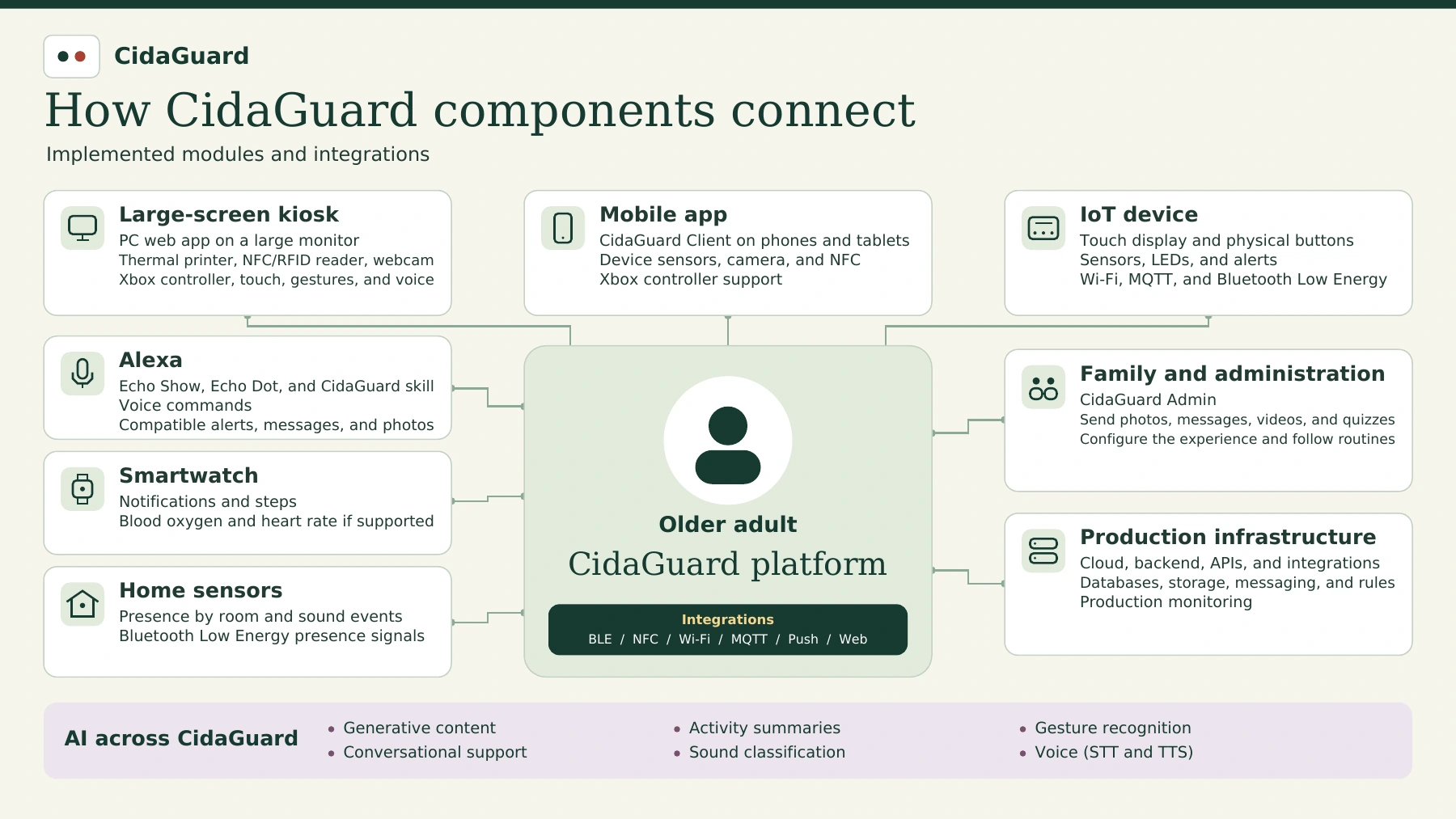
An Alexa skill connects the platform to Alexa. The Echo Dot supports voice interactions and compatible alerts. The Echo Show can also display content, depending on which features are enabled.
IoT devices can combine a display, buttons, LEDs, and sensors. The kiosk can connect to a printer, webcam, and tag reader. Wi-Fi, Bluetooth Low Energy, NFC/RFID, and MQTT connect the components as needed.
Two completed MBA projects explored how technology can adapt to people and shed light on daily routines at home.
Luciane’s MBA project uses presence sensors throughout the home to study activity patterns and possible changes in daily routines.
The second MBA project explores how generative AI, computer vision, speech, sound classification, and conversational agents expand options for interaction and routine monitoring.
Several components already work, and pilots are underway. Components are at different stages of development and integration. Palma Labs brings together architecture, web and mobile development, electronics, IoT, sensors, cloud infrastructure, backend systems, data, and AI. The team prototypes, integrates, and tests components end to end.
CidaGuard began with one family’s need. The challenge now is to turn what already works into a product that reaches more people.
That means bringing the integrations together, improving accessibility and reliability, simplifying installation and maintenance, strengthening security and privacy, and testing new uses. The next stage also involves preparing to operate in different settings and building a sustainable business model.
If you work in aging or care, represent an organization, can support the project, or know someone who might connect with the idea, we’d like to hear from you.